
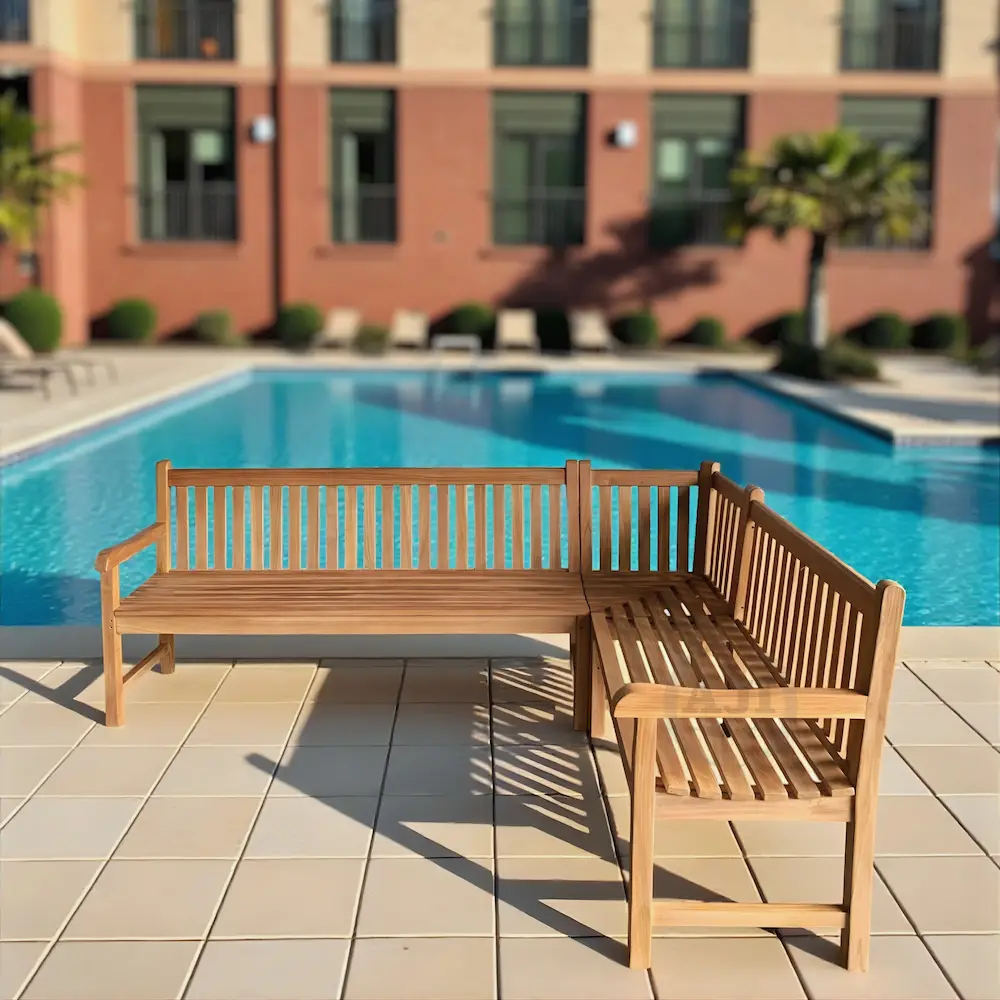
When discussing sustainable living, timber isn’t always the first thing that comes to mind. However, when harvested responsibly, Teak wood (Tectona grandis) offers significant environmental benefits that make it one of the most eco-friendly choices for home and garden furniture.
Here is how choosing teak furniture contributes to a greener planet and promotes a more sustainable lifestyle.
1. Responsibly Managed Plantations & Forest Preservation
Unlike fast-growing softwoods that are often linked to rapid, destructive deforestation, high-grade teak is cultivated through long-term, managed forestry.
In regions like Indonesia, teak is grown on government-regulated plantations (Perhutani) operating under strict compliance programs such as SVLK (Timber Legality Verification System). These sustainably managed forests follow strict replanting cycles: for every mature tree harvested, new saplings are planted. This controlled management maintains local ecological balances, preserves soil health, and prevents illegal logging.
2. Fighting the “Throwaway Culture” (Minimizing Landfill Waste)
The modern furniture industry suffers from a major sustainability problem: fast furniture. Cheap, mass-produced pieces made of particle board or plastic often wear out, break, or rot within 2 to 3 years, ending up in municipal landfills.
Teak wood naturally solves this problem through its extraordinary longevity:
-
Built for Generations: A solid teak bench or table can easily last 30 to 50+ years outdoors without losing structural integrity.
-
Waste Reduction: Because you don’t need to replace teak furniture every few seasons, buying teak significantly reduces consumer landfill waste and cuts down on total resource consumption over time.
The Sustainability Cycle Comparison
| Feature / Metric | Cheap Plastic / Composite Furniture | Solid Teak Furniture |
| Lifespan | Short (Replace every 2–3 years) | Long (Lasts 30–50+ years) |
| Environmental Impact | Landfill accumulation & waste generation | Zero waste & eco-friendly |
| Sustainability Rating | Low (Linear/disposable cycle) | High (Circular & generational) |
| Long-Term Value | High recurring costs (Frequent replacements) | High investment value (Cost-effective over time) |
3. Natural Carbon Storage (Carbon Sequestration)
Trees absorb carbon dioxide ($CO_2$) from the atmosphere as they grow. When a teak tree is harvested and crafted into long-lasting furniture, that absorbed carbon remains safely trapped inside the wood fiber for decades instead of being released back into the atmosphere through decay or burning. Choosing solid timber furniture is essentially keeping carbon locked away for generations.
The Takeaway: Mindful Consumption
True sustainability isn’t just about buying items made from recycled materials—it’s about buying better and buying less. Investing in durable, sustainably harvested teak wood aligns perfectly with a mindful, eco-friendly lifestyle. You get timeless craftsmanship for your home while reducing your overall environmental footprint.